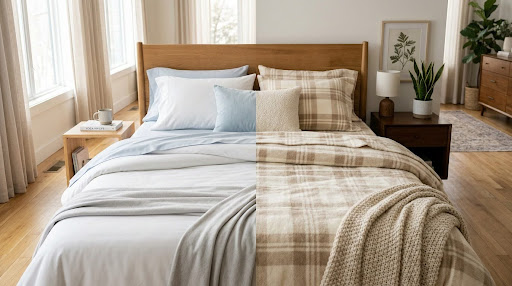
A good night’s sleep often starts with the right bed sheets. However, many people choose bedding based only on appearance or price, only to realise later that the fabric feels too warm, too heavy, or difficult to maintain. When comparing Microfiber vs Flannel Sheets, the right choice depends on your sleeping habits, room temperature, comfort preferences, and laundry routine.
Some people prefer lightweight sheets that are easy to wash and quick to dry. Others want bedding that feels warm and cosy during colder months. The challenge is finding sheets that remain comfortable throughout the year without becoming difficult to care for.
For example, someone living in a modern flat with central heating may find flannel bedding too warm. On the other hand, a person living in a colder home may feel chilly using lightweight microfiber sheets during winter. Understanding how each fabric performs in everyday situations can help you make a better decision.
This guide explores the differences between Microfiber vs Flannel Sheets, including comfort, warmth, durability, maintenance, and suitability for year-round use.
What Are Microfiber Sheets?
Microfiber sheets are made from very fine synthetic fibres, usually polyester. These fibres are tightly woven together to create fabric that feels smooth, soft, and lightweight.
One reason many households choose microfiber bedding is convenience. Microfiber sheets resist creasing, dry quickly after washing, and are often more affordable than natural-fibre alternatives. For busy families, this makes weekly laundry routines much easier. They are also widely used in hospitality settings where bedding needs frequent washing and fast turnaround times. Many businesses that rely on a professional hotel laundry service prefer microfiber bedding because it dries quickly and maintains its appearance after repeated washes.
For example, parents with children often prefer microfiber because the sheets can handle frequent washing without needing ironing afterwards. Likewise, people living in humid environments appreciate how quickly microfiber dries compared to heavier fabrics.
When discussing Microfiber vs Flannel Sheets, maintenance is often one of the biggest deciding factors.
How Microfiber Sheets Feel
Microfiber has a silky and smooth finish rather than a fluffy texture. Many people enjoy how light the material feels during spring and summer.
However, some sleepers still ask, Are microfiber sheets hot? The answer depends largely on the quality of the fabric. Lower-quality microfiber can trap body heat because the fibres are woven tightly. Modern premium microfiber bedding offers better airflow and improved softness compared to older synthetic fabrics.
Benefits of Microfiber Sheets
- Lightweight and soft
- Budget-friendly
- Wrinkle-resistant
- Quick drying
- Easy to maintain
Drawbacks of Microfiber Sheets
- Can feel warm for hot sleepers
- Synthetic fibres may not suit everyone
- Lower-quality sheets may pill over time
Many people also wonder, are microfiber bed sheets good or bad? In reality, they work well for households looking for affordable, practical, and low-maintenance bedding. The experience often depends on the quality of the sheets you buy.
What Are Flannel Sheets?
Flannel sheets are usually made from cotton, wool, or blended fibres that are brushed during manufacturing to create a soft and fuzzy surface. This brushing process traps warmth, which is why flannel is commonly associated with winter bedding.
Unlike microfiber, flannel feels warm and cosy almost immediately after getting into bed.
For instance, many households switch to flannel sheets during autumn and winter because they make cold bedrooms feel noticeably warmer without needing additional blankets. In colder parts of the UK, many homeowners also rely on professional London laundry providers to care for heavier flannel bedding properly during the winter months.
When comparing Microfiber vs Flannel Sheets, warmth is where flannel often stands out.
Why Flannel Feels Warmer
The brushed fibres in flannel create tiny pockets of air that help retain body heat. As a result, flannel sheets warm up quickly and stay warm throughout the night.
This leads many people to ask, Are microfiber sheets warmer than flannel? In most cases, flannel provides more insulation and warmth than standard microfiber bedding, especially during colder weather.
Benefits of Flannel Sheets
- Excellent warmth during winter
- Soft and cosy texture
- Durable when cared for properly
- Often becomes softer over time
Drawbacks of Flannel Sheets
- May feel too warm during the summer
- Can shrink if washed incorrectly
- Some flannel sheets pill after repeated use
Although flannel performs exceptionally well in cold weather, it may not be ideal for year-round use in warmer homes.
Microfiber vs Flannel Sheets: Which Feels More Comfortable?
Comfort depends on personal preference as well as room temperature.
Microfiber sheets feel smooth, crisp, and lightweight. People who dislike heavy bedding often prefer microfiber because it does not feel bulky. This makes it suitable for warmer bedrooms or homes with strong indoor heating.
Flannel, on the other hand, creates a softer and more insulated sleeping experience. The brushed texture feels warmer and more comforting during cold nights.
For example:
Someone living in a warm city flat may prefer microfiber throughout the year because flannel feels too hot.
Meanwhile, someone in a colder rural home may rely on flannel bedding during winter for additional warmth and comfort.
When discussing Microfiber vs Flannel Sheets, neither material is universally better. The best option depends on your environment and sleep preferences.
Which Option Works Best for Year-Round Comfort?
Temperature regulation is one of the most important factors when choosing bedding.
Microfiber for Mild and Warm Conditions
Microfiber sheets generally perform better in mild or warm temperatures because they feel lighter and less insulating. They also dry quickly after washing, which helps in homes with limited drying space.
People often compare Microfiber vs cotton sheets when searching for breathable bedding. While cotton usually offers more natural airflow, microfiber often wins in convenience, affordability, and easy maintenance.
Flannel for Colder Weather
Flannel performs best during autumn and winter because it retains heat effectively. Many cold sleepers consider flannel among the Best flannel sheets options for improving winter comfort.
However, most people pack away flannel bedding once warmer temperatures arrive because the insulation can become uncomfortable during summer.
Durability and Longevity
The lifespan of bedding depends not only on the fabric itself but also on how the sheets are washed and maintained.
Microfiber Durability
Microfiber resists shrinking and generally maintains its shape after repeated washing. It is also less likely to wrinkle compared to natural fabrics.
However, poor-quality microfiber may pill over time, particularly if washed alongside rough fabrics such as towels.
Flannel Durability
Flannel can last for years when properly cared for. In fact, many people notice flannel sheets becoming softer with age.
Premium brands such as Shavel Micro Flannel sheets are especially popular among people looking for extra softness combined with warmth. These products are designed to provide the cosy feel of traditional flannel while using lightweight microfibres.
Some consumers also choose Micro Flannel sheets because they combine softness with easier maintenance compared to heavier cotton flannel bedding.
Maintenance and Laundry Care
Maintenance is often overlooked when purchasing bedding, but it has a major impact on long-term comfort and durability.
Caring for Microfiber Sheets
Microfiber is generally easy to maintain.
To keep microfiber bedding in good condition:
- Wash in cool or warm water
- Use mild detergent
- Avoid excessive fabric softener
- Tumble dry on low heat
Because microfiber dries quickly, it suits people with busy schedules or limited laundry space.
Caring for Flannel Sheets
Flannel requires slightly more care.
To maintain softness and reduce shrinkage:
- Use gentle washing cycles
- Avoid high dryer temperatures
- Wash separately from rough fabrics
- Avoid overdrying
Proper laundry care helps preserve softness and extend the lifespan of both fabrics.
Are Microfiber Sheets Good for Skin?
People with allergies or sensitive skin often pay close attention to bedding materials.
Many shoppers ask, Are microfiber sheets good for skin? The answer depends on individual sensitivity. Microfiber’s tight weave can help reduce dust accumulation, which may benefit allergy sufferers. However, some people dislike the feel of synthetic fabrics against their skin.
Cotton flannel often feels softer and more breathable for sensitive skin. Still, because flannel retains warmth, it may feel uncomfortable for people who overheat during sleep.
Trying both fabrics personally is often the best way to determine which feels more comfortable for your skin type.
Environmental Considerations
When comparing Microfiber vs Flannel Sheets, environmental impact is another important consideration.
Microfiber is synthetic and may release microplastics during washing. Flannel made from natural cotton avoids synthetic fibres, although cotton farming also requires significant water usage.
If sustainability matters to you, investing in high-quality bedding that lasts longer can reduce waste regardless of the material you choose.
Replacing cheaper bedding frequently often creates more environmental impact than properly maintaining durable sheets.
Which Bedding Option Should You Choose?
The choice between Microfiber vs Flannel Sheets depends on your sleeping habits, climate, and comfort preferences.
Choose microfiber if you:
- Prefer lightweight bedding
- Want easier maintenance
- faster drying laundry
- Sleep warm throughout the year
Choose flannel if you:
- Prefer warm and cosy bedding
- Live in a colder climate
- Often feel cold at night
- Want extra insulation during winter
Some households even use both options seasonally. For example, microfiber may work best during spring and summer, while flannel becomes more comfortable during autumn and winter.
Final Thoughts
There is no single bedding material that suits everyone perfectly. The best sheets are the ones that help you sleep comfortably while fitting naturally into your lifestyle and laundry routine.
When comparing Microfiber vs Flannel Sheets, microfiber offers convenience, affordability, and easier maintenance, while flannel provides warmth and softness during colder months.
Whichever option you choose, proper washing and fabric care make a major difference in maintaining comfort and extending the life of your bedding.